How to Bleed a Radiator: Step-by-Step Guide
If your radiator is cold at the top but warm at the bottom, trapped air is almost always the cause. Bleeding it releases that air and restores full, even heat. Most radiators can be bled in under five minutes with a radiator key, a cloth, and a container to catch any water.
How Do I Know If My Radiator Needs Bleeding?
The clearest sign is a radiator that's cold at the top and hot at the bottom, since trapped air rises and sits above the water. You might also notice gurgling noises when the heating is on, a radiator that takes longer than usual to warm up, or reduced heat output across the room even with the thermostat turned up.
What You'll Need
- A radiator key (or a flathead screwdriver, for older valve types)
- An old cloth or towel
- A small bowl or container to catch drips
- A dry cloth for wiping down the valve afterwards
How to Bleed a Radiator in 6 Steps
- 1
Turn off your heating and let the radiator cool
Bleeding a hot radiator risks scalding from escaping water and steam, so switch the system off and wait at least 20 to 30 minutes.
- 2
Find the bleed valve
It's a small square-shaped valve, usually at the top corner of the radiator, opposite the thermostatic control.
- 3
Protect the floor
Hold your cloth or towel underneath the valve and keep the container close by to catch any drips.
- 4
Open the valve slowly
Turn the radiator key anticlockwise a quarter turn. You'll hear a hissing sound as trapped air escapes.
- 5
Close the valve once water appears
As soon as the hiss stops and a small trickle of water comes out, turn the key clockwise to close the valve firmly.
- 6
Repeat for every radiator that's cold at the top
Work through the rest of the house, starting with the radiator closest to your boiler and finishing with the one furthest away.
What to Do After Bleeding Your Radiator
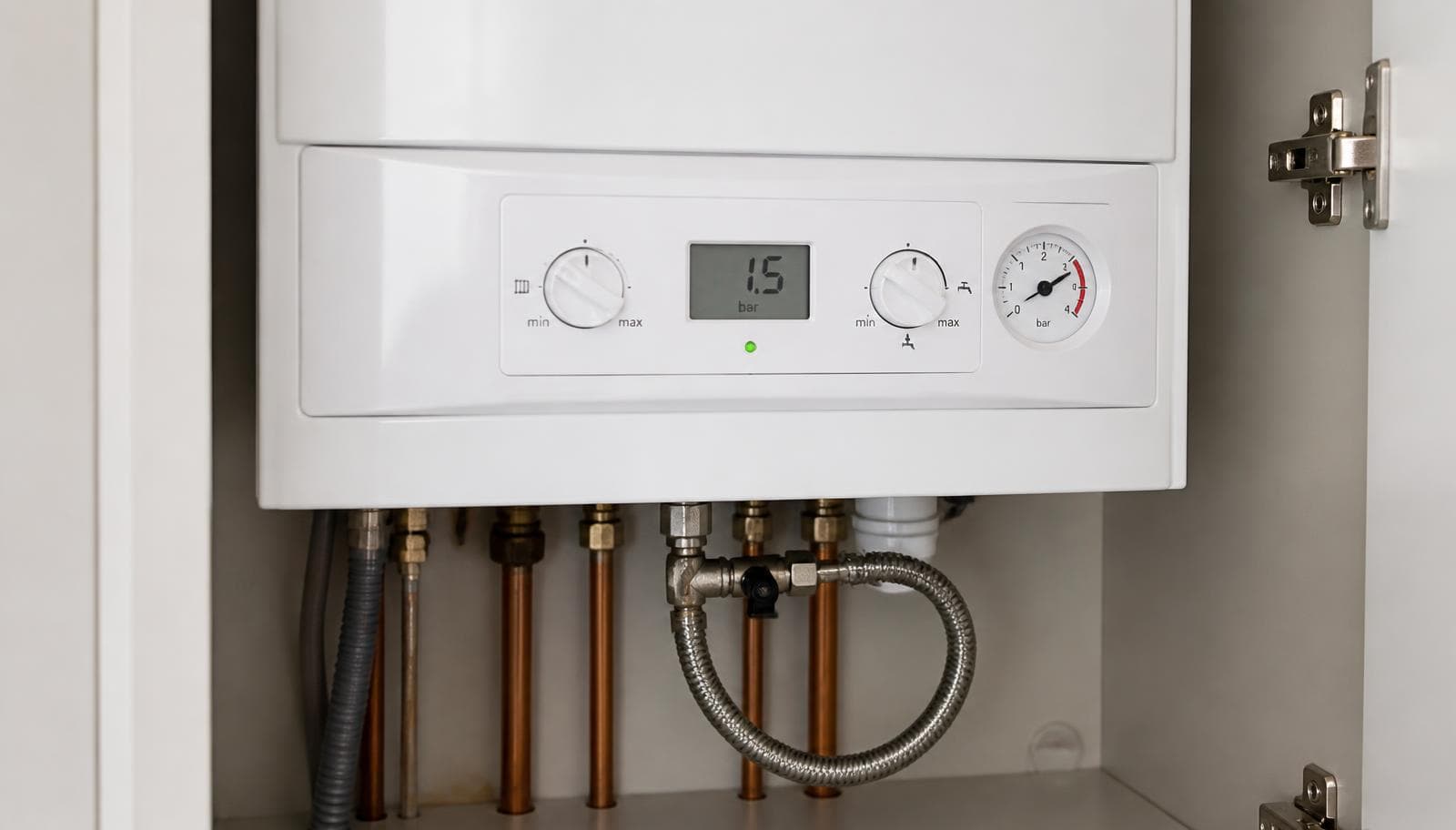
Releasing air from your system lowers the water pressure slightly, so check your boiler pressure gauge once you've finished. If it's dropped below 1 bar, you'll need to top it up using the filling loop.
Turn your heating back on and check that every radiator is now heating evenly from top to bottom. If one radiator still isn't warming up properly after bleeding, this can point to a different issue, such as a stuck valve or a blocked pipe, rather than trapped air.
Why Does Air Get Into Radiators?
Air usually enters a heating system in one of three ways. During installation or repressurising, small amounts of air get introduced along with the water. Over months and years, internal corrosion of steel radiators produces hydrogen gas as a by-product, which collects at the highest points of the system. And microscopic leaks around pump seals or valve joints can let air seep in gradually, even without any visible water loss.
This is why bleeding once isn't always a permanent fix. If the same radiator needs bleeding every few weeks, it's usually a sign of an ongoing cause rather than a one-off pocket of air.
“Radiators only need to be bled once a year, ideally right before winter. A tell-tale sign of trapped air is when radiators have cold patches at the top. Having to bleed your radiators frequently is a sign of corrosion. That's why during installation we always chemically flush, add a magnetic filter and an inhibitor to set the system up for a long and efficient life cycle.”
Key Takeaways
- A radiator that's cold at the top and warm at the bottom almost always needs bleeding.
- Always let your heating cool before opening the bleed valve.
- Check your boiler pressure after bleeding and top it up if it's fallen below 1 bar.
- Needing to bleed the same radiator repeatedly usually points to a bigger underlying issue, not a one-off problem.
- If bleeding doesn't fix it, or a specific radiator stays cold, it's worth getting a professional to take a look.
FAQ
How often should you bleed a radiator?
Most homes only need to bleed radiators once a year, typically at the start of the heating season. If you're doing it more often than that, there's likely an underlying cause worth checking.
Can you bleed a radiator with the heating on?
It's best to turn the heating off first. Bleeding a hot radiator increases the risk of scalding from hot water or steam escaping through the valve.
How do you bleed a radiator without a key?
Many radiators can be opened with a flathead screwdriver instead of a dedicated key, though older or non-standard valves may need a specific tool.
How long does it take to bleed a radiator?
Bleeding a single radiator usually takes two to five minutes. Allow extra time if you're working through several radiators in the same session.
What if my radiator still isn't warming up after bleeding?
If a radiator stays cold even after bleeding, the cause is likely something bleeding can't fix, such as a stuck valve, trapped debris, or a wider pressure issue. Our Gold, Platinum, and Diamond plans include annual servicing and priority call-outs from Gas Safe registered engineers, so you're not left guessing.